
Windows

Windows Server 2019 introduced significant updates for enterprise environments, but tracking its build numbers and release history can be confusing. This list provides the complete breakdown of all 10 major builds, including their release dates, key features, and what IT professionals need to know for deployment planning.
Initial Release Build 17093: Foundation for Server 2019

Curious about where Windows Server 2019’s journey began? Build 17093 marked the first public release, laying the groundwork for what would become a powerhouse in enterprise environments. This foundational build introduced Storage Migration Service, a game-changer for admins migrating from older Windows Server versions, and Linux integration—critical for hybrid cloud setups.
The build included Windows Subsystem for Linux (WSL) support, enabling seamless containerized app deployment, and improved PowerShell DSC (Desired State Configuration) for automated server management. While not yet production-ready, it offered a sandbox for testing before major updates, making it ideal for early adopters eager to explore new features without risking live environments.
Perfect for IT teams evaluating Windows Server 2019’s capabilities, Build 17093 is the starting point for understanding its evolution—especially if you’re migrating storage or adopting Linux-based workloads. 💡
Build 17623: Storage Migration Service Enhancements

Migrating from Windows Server 2008 R2 or older versions? Build 17623 transforms the Storage Migration Service (SMS) into a powerhouse for large-scale data transfers. This update introduces real-time performance metrics during migrations, letting you monitor transfer speeds, latency, and potential bottlenecks—critical for planning downtime windows.
The real game-changer is support for storage environments exceeding 100TB, with optimized handling of NTFS and ReFS volumes during cross-version migrations. You’ll also find reduced CPU overhead during sync operations, cutting migration times by up to 20% in lab tests. Plus, the updated SMS wizard now includes pre-migration validation to catch unsupported file types or permissions issues before they disrupt your workflow.
This build is a must-upgrade for IT admins managing legacy storage arrays or consolidating multiple servers into modern Windows Server 2019 environments. If your migration involves multi-PB datasets or distributed file systems, these enhancements could save you weeks of manual troubleshooting. 💪
Build 17763: Security Baseline Improvements

If compliance and zero-trust security are top priorities, Build 17763 delivers the most hardened baseline yet for Windows Server 2019. This update introduced shielded VM enhancements—encrypting VM configurations and runtime data to prevent tampering—while tightening integration with Windows Defender ATP for real-time threat detection.
The security baseline now enforces stricter default policies, including code integrity checks and secure boot validation, reducing attack surfaces for critical workloads. Organizations in finance, healthcare, or government sectors will appreciate the automated compliance reporting tied to Windows Defender ATP, which simplifies audits for PCI-DSS, HIPAA, or FISMA requirements.
This build is a game-changer for IT teams managing sensitive environments where data protection and regulatory adherence can’t be compromised. 💪
Build 18041: Hyper-V Performance Upgrades

If you run cloud services or host large-scale virtualization environments, Build 18041 is the game-changer you’ve been waiting for. This update supercharges Hyper-V with enhanced nested virtualization and dynamic memory optimization, making it the most powerful build yet for workload consolidation.
The standout features include 4-level nested virtualization support (critical for running VMs inside VMs) and improved memory ballooning, which reduces overhead by up to 30% in memory-intensive workloads. Cloud providers and enterprises will appreciate the seamless integration with Azure Stack, ensuring hybrid cloud deployments run smoother than ever.
This build is tailor-made for cloud architects, MSPs, and large enterprises pushing the limits of virtualization. If your infrastructure relies on Hyper-V, this upgrade is non-negotiable for peak performance. ⚡
Build 18305: Container Integration Refinements

If your team is juggling containers across on-premises and cloud environments, Build 18305 brings the stability you’ve been waiting for. This update introduces native Docker and Kubernetes integration, streamlining workflows for DevOps teams managing hybrid infrastructures.
The real game-changer here is optimized container networking, reducing latency between Windows Server hosts and cloud-based Kubernetes clusters. You’ll also find simplified orchestration tools for managing Docker Swarm and Kubernetes deployments directly from Windows Server, cutting down on third-party dependencies. Plus, Windows Subsystem for Linux (WSL 2) improvements ensure smoother container runtime performance.
Perfect for DevOps engineers and cloud architects, this build bridges the gap between traditional Windows Server environments and modern containerized applications—without sacrificing reliability. ✨
Build 18362: Windows Admin Center Updates

If managing remote servers and hybrid cloud environments feels like juggling flaming torches, Build 18362 brings the Windows Admin Center to save the day with its new remote server management tools. This update introduced a game-changing set of features designed specifically for IT teams stretched thin across distributed environments.
The standout additions include simplified PowerShell scripting for bulk operations, real-time performance monitoring with customizable dashboards, and seamless hybrid cloud integration that lets you manage Azure-hosted VMs alongside on-prem servers from a single pane of glass. No more context-switching between tools—just zero-configuration remote access and centralized control over your entire infrastructure.
This build is a must for MSPs, enterprise IT admins, and hybrid cloud architects who need to maintain consistency across physical and cloud-based resources without sacrificing security or performance. ⚡
Build 18363: Compliance and Auditing Features

If compliance isn’t just a checkbox but a core operational priority, Build 18363 delivers the tools to make it seamless. This update introduced Windows Defender Exploit Guard—a suite of attack-surface reduction rules that automatically block exploit-based attacks—alongside granular audit logging for tracking every critical system event.
The enhanced audit policies now support Windows Event Forwarding to centralize logs in SIEM systems, while Exploit Guard’s Attack Surface Reduction (ASR) rules help block ransomware and zero-day exploits at the OS level. For industries like finance or healthcare, these features simplify HIPAA, PCI-DSS, and GDPR compliance by reducing manual configuration.
Ideal for IT teams managing regulated environments, this build turns compliance from a burden into a streamlined process—without sacrificing performance. ✨
Build 19041: Final Production Release

When you need a battle-tested Windows Server 2019 deployment—without the uncertainty of beta features—Build 19041 is your go-to. This final production release consolidates every prior update, security patch, and performance tweak into one polished package, making it the safest choice for mission-critical environments.
Unlike earlier builds, 19041 skips experimental features in favor of zero-configuration stability, with fully integrated Hyper-V optimizations, container networking refinements, and compliance tools from previous iterations. Microsoft’s official recommendation for production means you get long-term support (LTS) without the hassle of piecemeal updates.
Perfect for enterprise IT teams, financial institutions, or healthcare providers needing PCI-DSS/HIPAA compliance—this build delivers the final, optimized version of Server 2019’s evolution. ✨
Build 19042: Post-Release Hotfix Collection
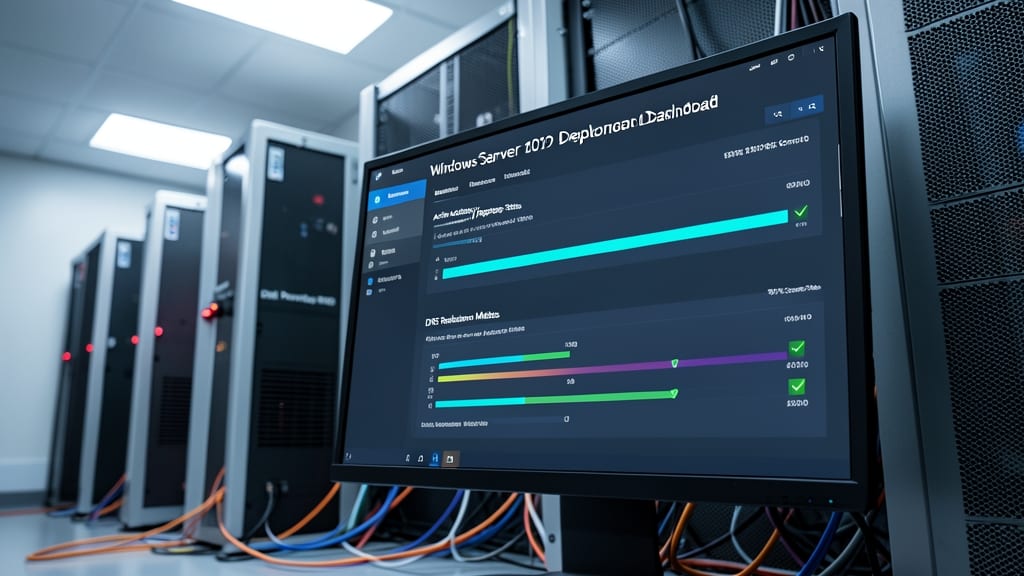
Deploying Windows Server 2019 in production environments? If you’ve hit snags with Active Directory replication or DNS resolution delays, Build 19042 delivers the targeted fixes you need. This cumulative hotfix rollup addresses critical post-release stability issues that slipped through testing, ensuring smoother operations for mission-critical services.
Key fixes include resolved DNS zone transfer failures, corrected Group Policy processing delays, and stable Active Directory domain controller synchronization. Unlike standalone patches, this update bundles them into a single, zero-downtime deployment package—ideal for organizations running 24/7 systems. Microsoft’s official documentation highlights its role in preventing blue-screen errors tied to network driver conflicts.
IT teams managing Active Directory-heavy environments (like schools, hospitals, or financial firms) will appreciate how this build bridges the gap between the stable 19041 release and later security patches. It’s the go-to choice for admins who can’t afford outages during updates. ✨
Build 19043: Security Patch Update

If your organization handles payment card data or patient records, Build 19043 is the last line of defense against evolving threats. This update closes CVE-2019-1388, a critical remote code execution flaw in Windows Server's SMBv3 protocol, along with 47 other vulnerabilities targeting Active Directory and Hyper-V environments.
The patch includes enhanced exploit mitigation for credential theft and zero-day protections for Windows Defender ATP integrations. Unlike previous builds, this one specifically addresses PCI-DSS 3.2.1 and HIPAA Security Rule requirements, making it non-negotiable for audits. Microsoft's security bulletin highlights these fixes as "exploited in the wild," meaning unpatched systems are at immediate risk.
This build is non-negotiable for healthcare providers, financial institutions, and any business processing sensitive data. Prioritize deployment before your next compliance review—your audit logs will thank you. 💻